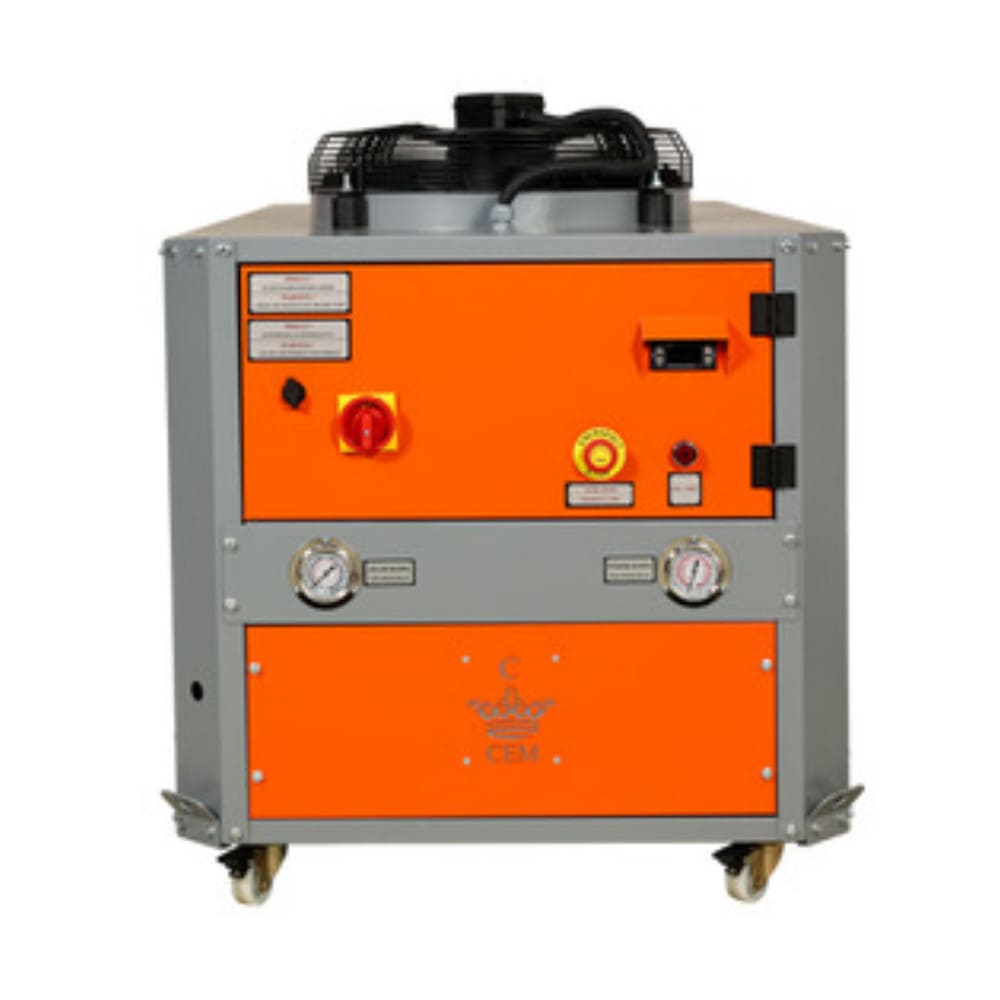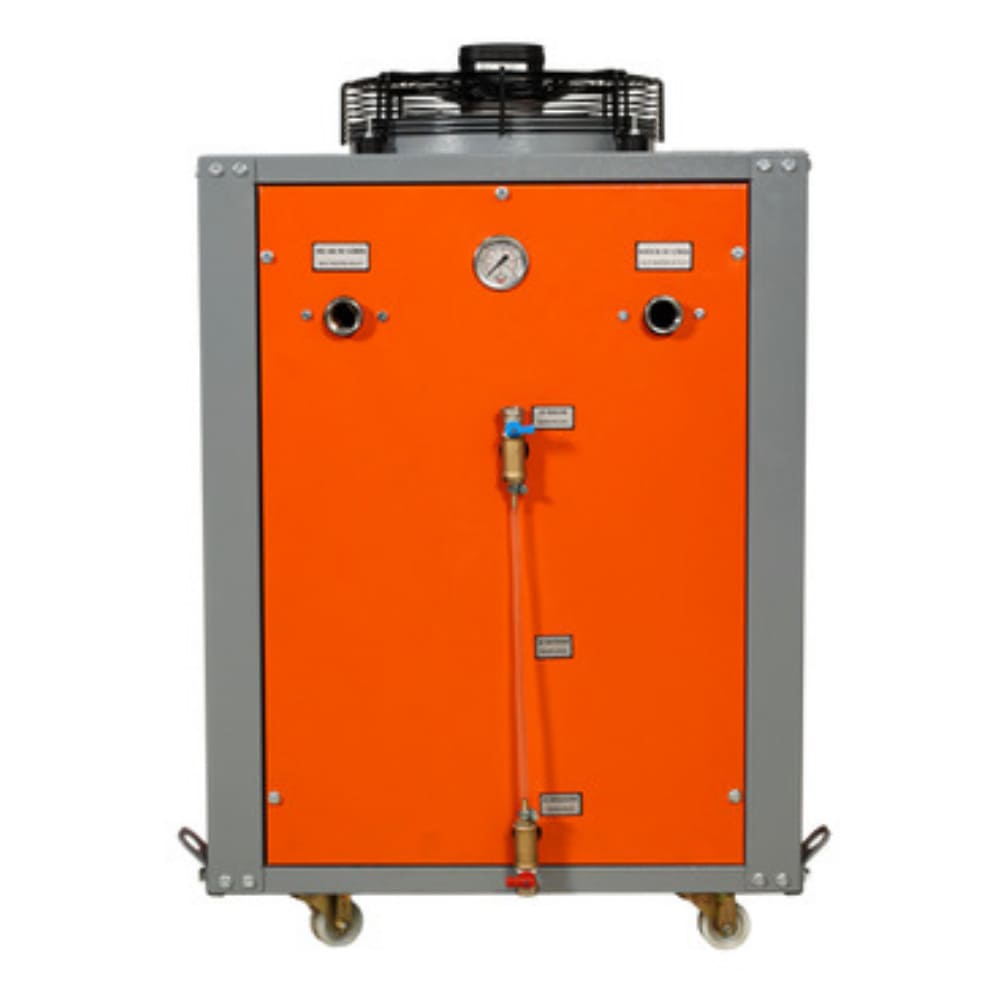


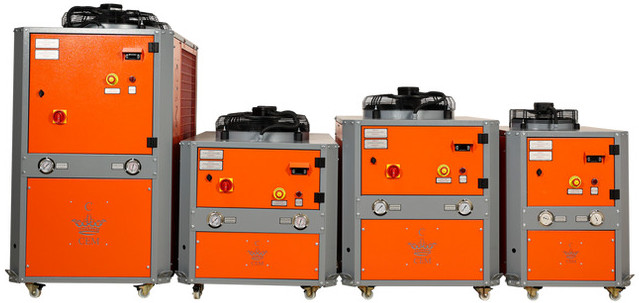
Tandem Scroll Compressor Chiller Systems: A New Standard in Energy Efficiency
Energy efficiency in the HVAC industry is no longer simply a preference; it has become a significant competitive advantage for businesses. Rising energy costs, sustainability targets, and environmental regulations are driving chiller manufacturers to develop more efficient and intelligent systems.
One of the most important examples of these developments is tandem scroll compressor technology. Widely used in air-cooled and water-cooled chillers, particularly within the 40 kW to 300 kW capacity range, this technology offers significant advantages in terms of both energy savings and system reliability.
In this article, we will examine in detail the operating principles, technical advantages, design criteria, and recommended applications of tandem scroll compressor systems.
What Is a Scroll Compressor?
A scroll compressor is a positive-displacement compressor consisting of two interlocking spiral elements. One of the scrolls remains stationary, while the other moves in an eccentric orbit.
During this process, the refrigerant is compressed from the outer edge toward the center and then discharged at high pressure to the condenser.
The main advantages of scroll compressors include:
- Quiet operation
- Low vibration
- High volumetric efficiency
- Fewer moving parts
- Low maintenance requirements
- High reliability
Thanks to these characteristics, scroll compressors have become one of the most widely used compressor types in modern commercial air-conditioning systems and medium-capacity chiller applications.
What Is a Tandem Scroll Compressor System?
A tandem scroll system is based on the operation of two scroll compressors connected in parallel within the same refrigeration circuit.
Both compressors share:
- A common suction line
- A common discharge line
- The same evaporator
- The same condenser
The electronic control system independently switches the compressors on or off according to the cooling load.
For example:
- At low load, only one compressor operates.
- At medium load, the second compressor is brought online in stages.
- At full load, both compressors operate simultaneously.
In this way, the system delivers the required cooling capacity according to demand while avoiding unnecessary energy consumption.
How Do Tandem Scroll Systems Work?
In modern microprocessor-controlled chillers, compressor operation is continuously managed by monitoring the following parameters:
- Return water temperature
- Leaving water temperature
- Evaporating pressure
- Condensing pressure
- Superheat
- Compressor operating hours
- Ambient temperature
The control algorithm analyzes the system load and determines which compressor should be brought into operation.
In addition, compressor operating hours are balanced to ensure that both compressors run for approximately equal periods. This approach helps distribute mechanical wear evenly and contributes to extending the service life of the equipment.
Advantages of Tandem Scroll Compressors
1. Superior Part-Load Efficiency
A chiller system does not operate at full capacity for most of the year. In most commercial buildings, the actual operating load typically ranges between 40% and 70% of the design capacity.
In systems using a single large compressor, frequent start-stop cycling may occur under low-load conditions. This can increase energy consumption and accelerate mechanical wear.
In tandem scroll systems, only the required number of compressors is operated according to the cooling demand. As a result:
- Electricity consumption is reduced.
- The number of start-stop cycles is minimized.
- Seasonal efficiency is improved.
- Compressor service life is extended.
This configuration provides significant advantages, particularly in performance metrics that evaluate part-load efficiency, such as IPLV (Integrated Part Load Value) and ESEER (European Seasonal Energy Efficiency Ratio).
2. More Precise Capacity Control
The cooling load can vary continuously throughout the day. Solar heat gain, outdoor temperature, occupancy levels, and process loads directly affect the required cooling capacity.
Tandem scroll systems can respond quickly to these changing conditions.
As a result:
- Leaving water temperature remains more stable.
- Temperature fluctuations are reduced.
- Comfort levels are improved.
- Unnecessary energy consumption is prevented.
3. Redundancy and Operational Reliability
In single-compressor systems, a compressor failure will generally cause the entire cooling system to shut down.
In tandem systems, however, if one compressor fails, the other can continue operating and provide partial cooling capacity.
This feature is particularly important for applications such as:
- Hospitals
- Data centers
- Laboratories
- Pharmaceutical manufacturing facilities
- Food storage facilities
- Industrial processes
By helping prevent a complete shutdown of the cooling system, this configuration also provides significant flexibility in maintenance planning and system operation.
4. Lower Starting Current
One of the most demanding moments for the electrical system occurs when a compressor starts up.
By starting the two compressors sequentially:
- Sudden load on the electrical supply is reduced.
- Voltage drop is minimized.
- The service life of electrical equipment may be extended.
- More stable operation can be achieved in generator-supported systems.
5. Extended Compressor Service Life
Modern control software balances the operating hours of the compressors to ensure a more even distribution of runtime.
As a result:
- Mechanical wear is distributed more evenly.
- Maintenance costs may be reduced.
- The risk of failure may be minimized.
- The overall service life of the system may be extended.
Comparison of Tandem Scroll and Inverter Scroll Systems
A frequently asked question in the HVAC industry concerns the differences between tandem scroll and inverter scroll systems.
| Feature | Tandem Scroll | Inverter Scroll |
|---|---|---|
| Capacity control | Staged | Continuous |
| Initial investment cost | More economical | Higher |
| Part-load efficiency | High | Very high |
| Control complexity | Moderate | High |
| Redundancy | Available | Generally not available |
| Ease of maintenance | High | More complex |
Both technologies offer energy-efficient solutions. When selecting the most appropriate system, factors such as capacity range, initial investment budget, load profile, and operational requirements should be evaluated together.
Key Design Considerations
A successful tandem scroll application depends on more than simply selecting the right compressors.
The following design criteria directly affect overall system performance and reliability:
- Proper oil return design
- Balanced refrigerant piping
- Use of electronic expansion valves
- Adequate superheat control
- Accurate pressure sensors
- Advanced microprocessor-based control system
- Intelligent compressor sequencing algorithms
- Freeze and high-pressure protection
An improperly designed system may result in capacity loss, lubrication problems, and compressor failures.
Which Chiller Systems Use Tandem Scroll Technology?
Tandem scroll compressor technology is widely used in the following systems:
- Air-cooled chillers
- Water-cooled chillers
- Heat pump systems
- Rooftop units
- Packaged air-conditioning systems
- Industrial process cooling systems
It provides significant energy-saving benefits, particularly in facilities that operate under varying load conditions throughout the year.
Which Industries Is It Suitable For?
Tandem scroll technology is widely used across the following sectors and facilities:
- Shopping malls
- Hotels
- Hospitals
- Universities
- Schools
- Office buildings
- Manufacturing facilities
- Data centers
- Logistics warehouses
- Food production facilities
- Chemical industry
- Plastic injection molding facilities
- Textile factories
Since the cooling load in these facilities typically varies throughout the day, tandem scroll systems can provide high operational efficiency and effective capacity management.
The Future of Tandem Scroll Technology
In next-generation chiller systems, tandem scroll compressors are increasingly integrated with inverter-driven fans, electronic expansion valves, EC motors, advanced microprocessor controllers, and next-generation low-GWP refrigerants.
This integration provides:
- Lower energy consumption
- More precise temperature control
- Reduced carbon emissions
- Quieter operation
- Longer equipment service life
In addition, advanced control systems capable of communicating with Building Management Systems (BMS) enable remote monitoring, fault diagnostics, and performance optimization, helping improve the overall efficiency and reliability of chiller systems.
Conclusion
Chiller systems equipped with tandem scroll compressors are among the most effective solutions in today’s HVAC industry in terms of energy efficiency, reliability, and operational continuity. Their high performance under part-load conditions, lower starting current, redundancy advantages, and balanced compressor operating strategy make them suitable for a wide range of commercial and industrial applications.
A tandem scroll chiller system designed with proper engineering calculations, manufactured using high-quality components, and supported by advanced control algorithms can provide businesses with lower energy costs, high performance, and reliable operation for many years.