Energy Efficiency in Chiller Systems
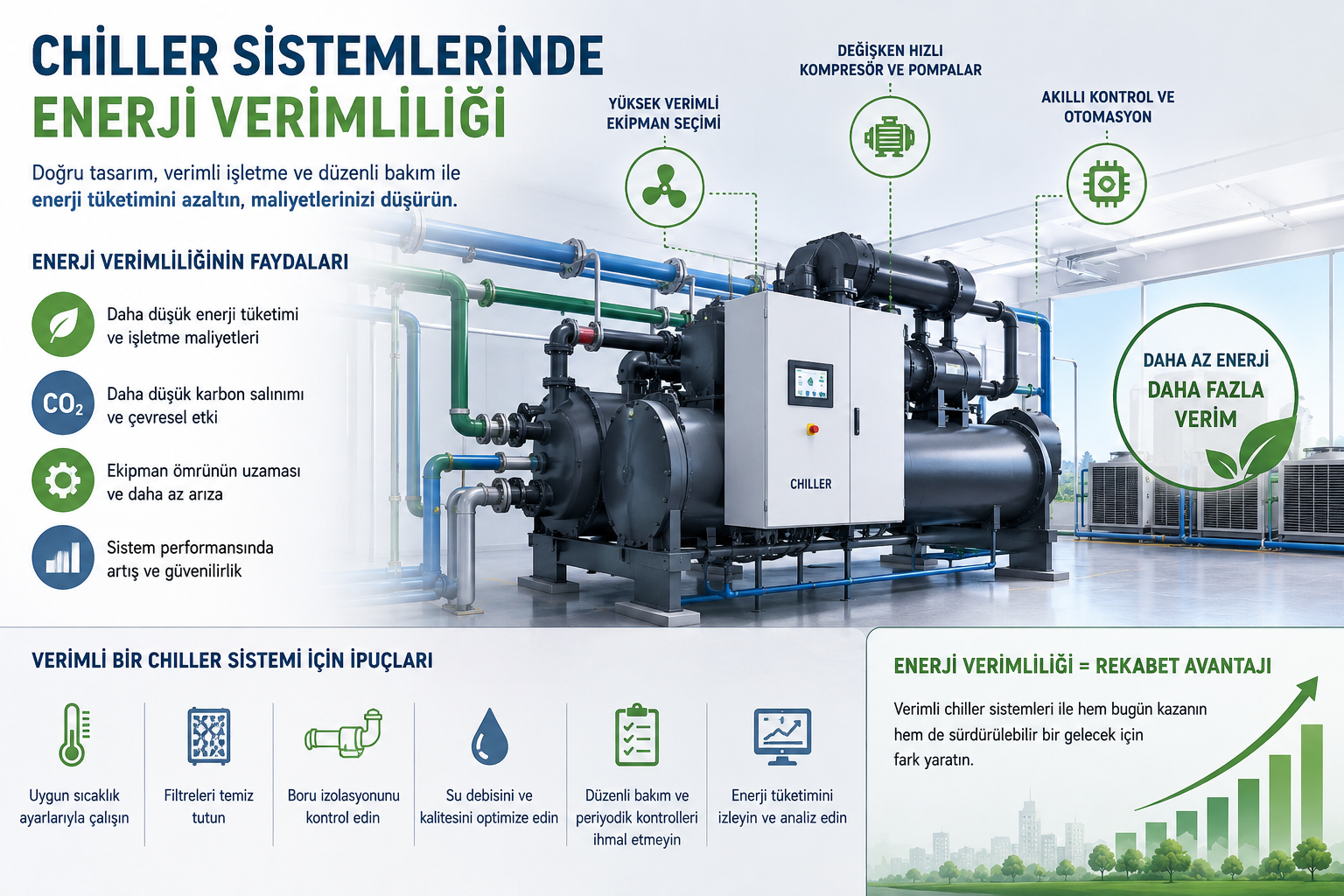
Chiller systems provide temperature control across applications ranging from industrial processes to commercial HVAC. Their energy consumption can significantly affect total operating costs. Efficiency therefore involves more than selecting the right unit capacity: design, control, maintenance and everyday operating practices must be considered together.
The first step is to understand the load profile. If capacity is selected only for peak instantaneous demand, the system may operate inefficiently at part load for much of the year. Assessing actual process requirements, target temperatures, operating hours and seasonal conditions helps reduce unnecessary energy use and frequent starts and stops. Variable-speed compressors, pumps and fans help the system adapt to current demand.
Temperature Regime and Hydronic Design
Even a small adjustment to chilled-water temperature affects operating pressures and energy consumption. Operating at the highest supply temperature permitted by the process can reduce compressor load. Pipe sizes, insulation, flow balance and pump head are equally important. Poor insulation or incorrect flow can prevent the system from achieving its intended performance even when the equipment is correctly selected.
Keeping heat exchangers clean maintains heat transfer at condenser and evaporator surfaces. Without water quality management, scaling, deposits and biological growth increase energy consumption. Regular filter checks, fan cleaning and early leak detection reduce the risk of unplanned downtime and help extend equipment life.
Continuous Improvement with Smart Control
System data must be monitored to maintain energy efficiency. Regular assessment of temperatures, flows, pressures, operating hours and electricity consumption reveals performance losses early. Automation can coordinate chillers, pumps and fans to avoid unnecessary simultaneous operation. Free-cooling applications can also reduce compressor use under suitable outdoor conditions.
An efficient chiller system combines sound engineering, application-appropriate equipment, regular maintenance and measurable operating discipline. This approach helps reduce energy costs and carbon impact, strengthens production continuity and increases the long-term value of the investment.
