Chillers in Plastics Processing
In plastics production, cooling is more than a way to remove excess equipment heat: it is a process stage that affects product quality and cycle consistency. Injection moulding, extrusion and blow moulding may require different temperatures. Chiller selection should therefore be based on production conditions and actual thermal loads, not merely on a machine’s installed power.
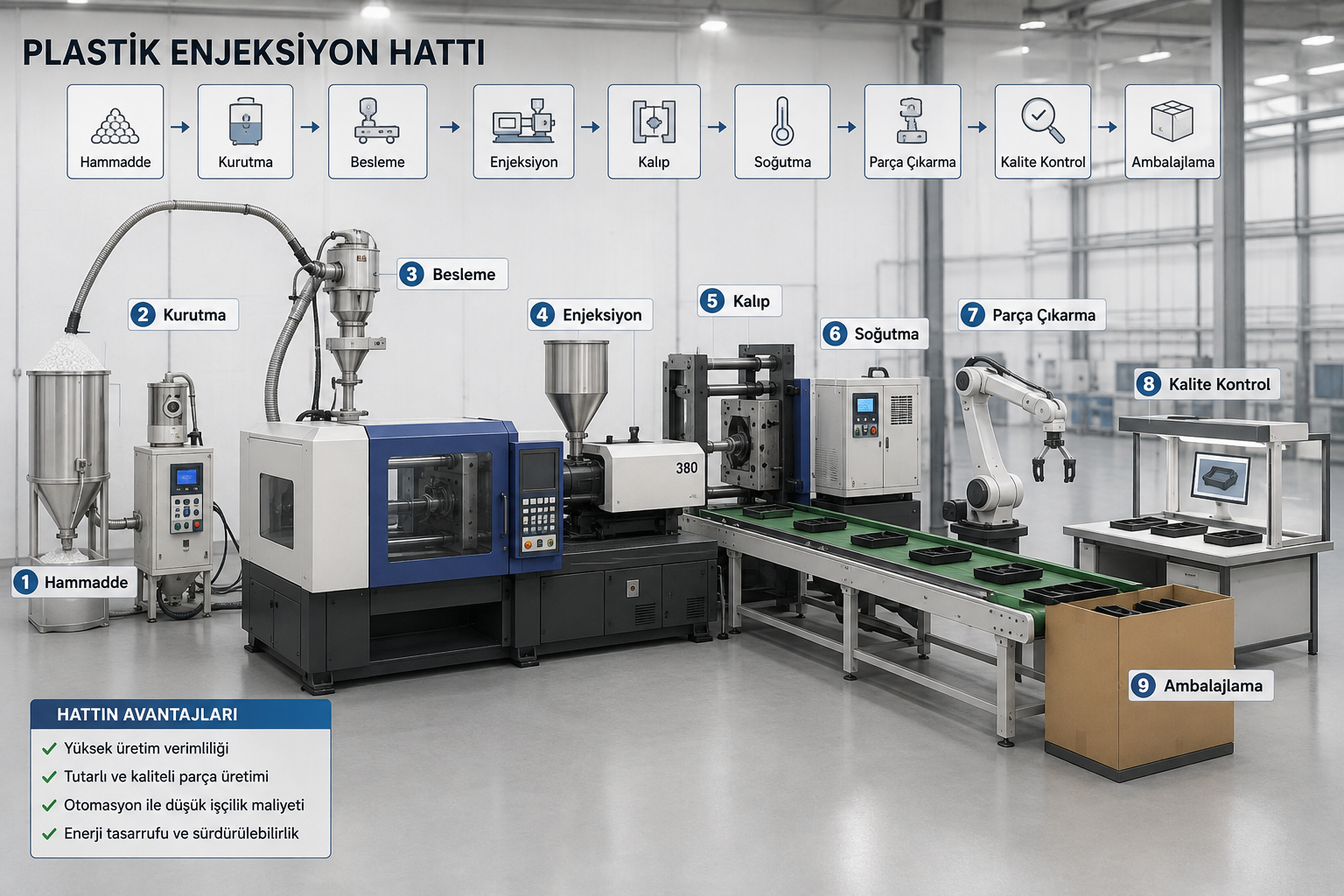
Mould Cooling and Product Quality
After molten plastic enters an injection mould, controlled cooling is required before the part can be ejected. Flow through mould channels and temperature distribution affect cycle repeatability. Depending on material and geometry, uneven cooling can contribute to dimensional variation or surface defects.
Colder water does not automatically improve production. The target temperature should reflect polymer properties, mould design and product requirements. Where necessary, the chiller works with mould temperature-control units; local temperature regulation and chilled-water production perform different functions.
Different Users, Different Requirements
Moulds, machine auxiliaries and hydraulic systems cooled through appropriate heat exchangers may require different temperature regimes. Rather than supplying all users with water at one temperature, each circuit’s requirements should be assessed separately. This helps avoid unnecessary low-temperature cooling.
Extrusion requires controlled cooling of the product or relevant equipment, while blow moulding depends on balanced mould and process conditions. Choosing between central cooling and machine-level solutions should account for line independence, plant layout and future capacity expansion.
Capacity and Hydraulic Design
Demand assessment should consider simultaneous production lines, output rates, material changes, required supply temperature and return-water conditions. High nominal cooling capacity is not enough: the required flow must also be delivered at the necessary pressure. Pipework, filters and mould channels contribute to total pressure losses.
Tank volume and control settings affect the response to sudden load changes. Water quality, filtration and pipe insulation also belong in system design. At lower temperatures, ambient dew point should be assessed so appropriate measures can be planned against condensation.
Efficiency and Production Continuity
Operating at a temperature permitted by the process is a useful starting point for reducing unnecessary cooling. Staged capacity control and application-specific pumping help match changing production demand. Savings depend on the existing installation and actual operating conditions; they should not be assumed as a fixed percentage.
Routine maintenance should check filters, heat exchangers, water leaks and temperature records. Fault notifications and remote monitoring can support earlier intervention. Any redundancy required for production continuity must be designed separately. Share your line count, operating temperatures, flow requirements and investment plans with the CEMS Chiller team to evaluate a suitable cooling solution.
Performance monitoring should include cycle time and production quality, not only water temperature. Recording settings during mould changes makes it easier to restore consistent conditions when the same product is manufactured again. Production and maintenance teams should manage the cooling system using a shared operating plan.
This article provides general information. Product selection and operating limits must be based on the relevant model’s technical documentation and project-specific calculations.

