
Why Ambient Temperature Matters When Selecting a Chiller
An air-cooled chiller rejects process heat and the energy added by its compressor through the condenser. As the condenser entering air becomes hotter, heat rejection becomes more demanding. Verify cooling capacity, power input and operating limits at the actual site conditions. [1, 2]
How does temperature affect capacity?
With other conditions unchanged, warmer condenser air generally raises condensing pressure and compressor pressure lift. Capacity may fall and the energy needed to meet a given load may increase. Fan control, compressor staging and protective controls affect the power response. Use manufacturer selection data rather than a universal capacity-loss percentage per degree. [1, 2]
Check both the ability to operate at a high temperature and the ability to deliver the required net capacity there. A selection report should show capacity, total electrical input, maximum current and the operating envelope.
Compare ratings at equivalent conditions
Check the current model table for the water and ambient temperatures used for its capacity rating. For example, if a project requires +7 °C water and +40 °C condenser entering air, verify capacity at that operating point. These temperatures are selection examples only.
Specify glycol concentration, flow, elevation and the required fouling allowance. Lower air density at elevated sites can affect condenser performance. [2]
Weather data and equipment inlet air
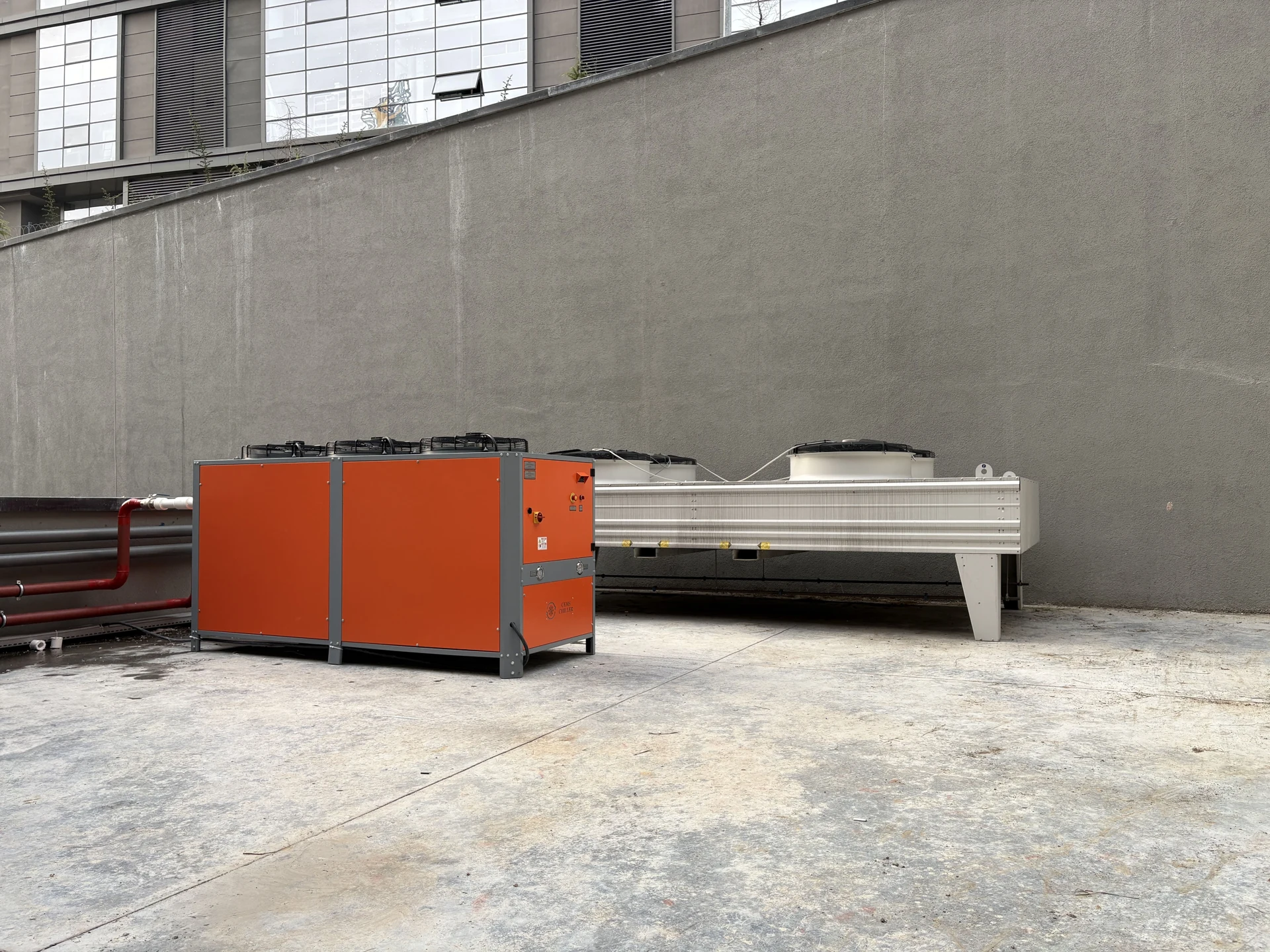
Walls, restricted recesses and adjacent units can cause discharged hot air to recirculate into the condenser. Apply the manufacturer’s inlet and discharge clearances and airflow requirements. Check how the expected equipment inlet temperature relates to the design weather condition. Keeping condenser coils clean also helps maintain heat rejection. [4]
| Condition | Selection check |
|---|---|
| Hot summer weather | Net capacity and power at design inlet air |
| Restricted location | Discharge-air recirculation and airflow |
| High elevation | Manufacturer’s air-density correction |
| Winter operation | Minimum ambient, fan control and freeze protection |
| Water-cooled system | Condenser water and tower wet-bulb conditions |
Winter operation and dry coolers
For winter process cooling, verify low-ambient starting and continuous operating limits. Define freeze protection, pump control and the required glycol concentration. A suitably designed dry cooler integration can meet part or all of the cooling load in cool weather. Control the economizer changeover using load and temperature differences, and include fan and pump electricity in the energy comparison. [2, 5]
Which temperature matters for water-cooled chillers?
Condenser entering water temperature is a primary selection input for a water-cooled chiller. With an evaporative cooling tower, outdoor wet-bulb temperature and tower approach become important. This requires a different selection basis from the dry-bulb conditions used for air-cooled condensers. [6]
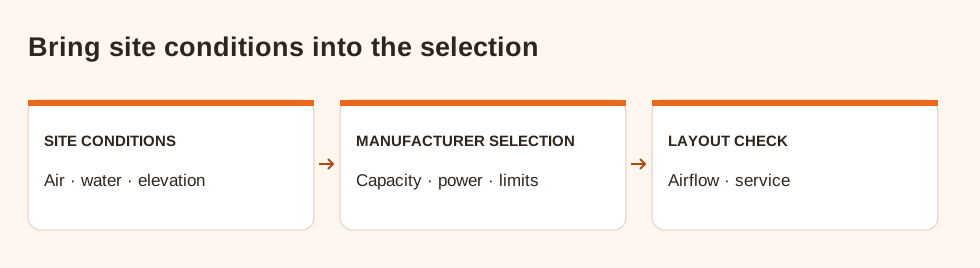
Include water temperatures, capacity, fluid, elevation, design maximum and minimum ambient temperatures and the layout in a quotation request. Compare final manufacturer selections at equivalent operating conditions.